Shop Jaws Podiatry on Amazon
Podiatrist-formulated foot-care products for fungus, calluses, and cracked heels.
Visit the Jaws Podiatry Store →As an Amazon Associate we earn from qualifying purchases.
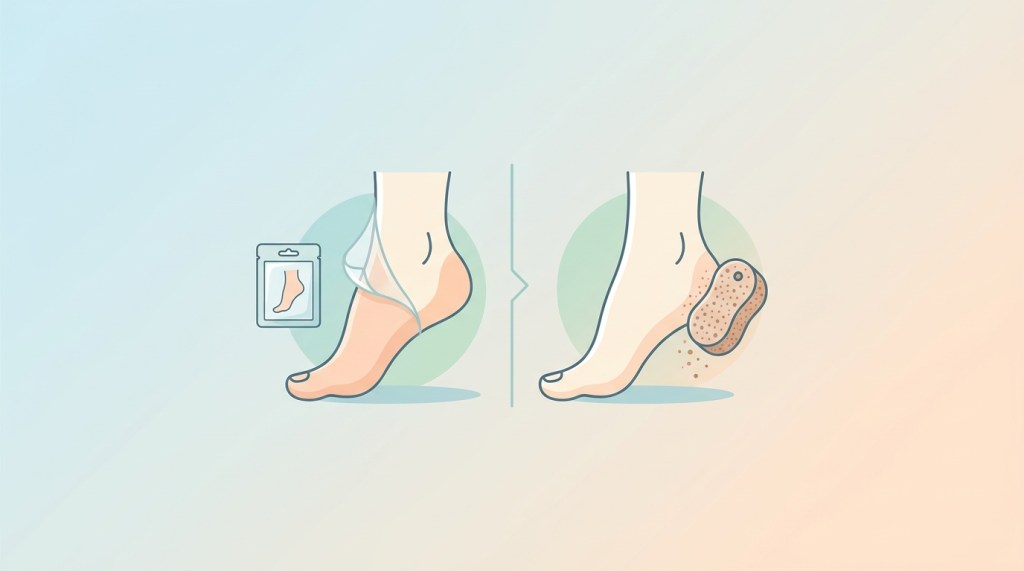
Deciding between a foot peel mask vs a pumice stone boils down to your specific foot care needs, desired results, and how much time and effort you’re willing to invest. Foot peel masks offer a dramatic, widespread chemical exfoliation that works over several days, ideal for overall rough, dry feet. In contrast, a pumice stone provides immediate, targeted manual exfoliation, perfect for managing specific calluses and rough spots with controlled precision.
What is a Foot Peel Mask?
A foot peel mask is a single-use treatment designed to shed dead, hardened skin from your feet through chemical exfoliation. Typically, these masks come as plastic booties pre-filled with a liquid solution containing alpha hydroxy acids (AHAs) like lactic acid and glycolic acid, or beta hydroxy acids (BHAs) such as salicylic acid. You wear the booties for a specified period, usually 60-90 minutes, allowing the acids to penetrate and loosen the bonds between dead skin cells. Over the next 3-14 days, your feet will begin to visibly peel, revealing softer, smoother skin underneath. The process is largely hands-off once the initial application is complete, but it requires patience as the peeling can be extensive and unpredictable.
What is a Pumice Stone?
A pumice stone is a lightweight, porous, and abrasive volcanic rock used for manual exfoliation. It works by physically buffing away dead skin cells, calluses, and rough patches from the feet. To use a pumice stone effectively, you first soak your feet in warm water to soften the skin, then gently rub the wet stone in circular motions over the affected areas. The natural abrasive texture of the stone mechanically removes layers of hardened skin. Pumice stones are reusable, durable, and offer immediate, visible results, making them a popular choice for targeted treatment of specific problem areas. They allow for a high degree of control over the exfoliation process, but require manual effort and proper technique to avoid over-exfoliation.
Shop Jaws Podiatry on Amazon
Podiatrist-formulated foot-care products for fungus, calluses, and cracked heels.
Visit the Jaws Podiatry Store →As an Amazon Associate we earn from qualifying purchases.
Head-to-Head Comparison
| Feature | Foot Peel Mask | Pumice Stone |
|---|---|---|
| Cost | Typically a one-time purchase per treatment, with prices varying based on brand and ingredients. Generally moderate cost per use. | Very low initial cost. A single stone is durable and reusable for a long time, making it highly economical. |
| Effectiveness | Provides widespread, deep chemical exfoliation over the entire foot. Highly effective for general roughness, widespread dryness, and mild to moderate calluses. Results appear over several days to two weeks. | Offers immediate, targeted mechanical exfoliation. Highly effective for specific, thicker calluses, corns, and localized rough patches. Results are visible instantly. |
| Ease of Use | Relatively hands-off after initial application (wearing booties). Requires patience during the peeling phase, which can be messy and inconvenient. No manual scrubbing required. | Requires manual effort and technique. Must soak feet first, then gently scrub. Allows for precise control over pressure and areas treated. Can be more effortful. |
| Who It’s Best For | Individuals with generally rough, dry feet, widespread mild calluses, or those seeking a dramatic “reset” for their feet without manual scrubbing. People who don’t mind waiting for results. | Individuals with specific, thicker calluses, corns, or localized rough spots that require targeted removal. Those who prefer immediate results and manual control over the exfoliation process. |
| Downsides |
|
|
When to Choose a Foot Peel Mask
A foot peel mask is an excellent choice if you’re looking for a comprehensive overhaul of your foot skin, particularly if you suffer from widespread dryness, general roughness, or mild to moderate calluses across a larger area of your feet. It’s ideal for those who prefer a less labor-intensive approach to exfoliation and don’t mind waiting a week or two for the full results to emerge. Think of it as a “reset button” for your feet, revealing a fresh layer of softer skin. It’s also a good option for people who struggle with the manual dexterity required for effective pumice stone use.
However, it’s crucial to exercise caution. If you have any open sores, cuts, or highly sensitive skin, a foot peel mask can cause irritation or adverse reactions. People with diabetes, neuropathy, or poor circulation should always consult a podiatrist before using chemical exfoliants like foot peel masks, as their skin may be more fragile or prone to complications. For a gentle, effective foot peel mask that you can try at home, consider exploring options like this one: Foot Peel Mask.
When to Choose a Pumice Stone
Opt for a pumice stone when your primary concern is specific, localized areas of hardened skin, such as thick calluses on the heels or balls of your feet, or troublesome corns. A pumice stone provides immediate feedback and allows you to control the intensity of exfoliation, making it perfect for targeted treatment. It’s also a great tool for regular maintenance to prevent calluses from building up in the first place, or for smoothing out smaller rough patches between more intensive treatments.
To use a pumice stone effectively, always soak your feet in warm water for 5-10 minutes to soften the skin before gently rubbing the wet stone. Avoid applying too much pressure, which can lead to over-exfoliation and irritation. Regular, gentle use is key. For those dealing with stubborn calluses and cracked heels, combining mechanical exfoliation with a potent moisturizing and softening cream can yield superior results. While a pumice stone is a generic tool, for comprehensive callus care, consider integrating a product like the Jaws Podiatry 40% urea callus cream + stainless-steel file kit check the current price on Amazon into your routine. The stainless steel file offers a similar targeted mechanical removal as a pumice, and the urea cream helps to soften and prevent future buildup. For a standalone pumice stone, you can find effective options here: Natural Pumice Stone.
As with any foot care tool, individuals with diabetes, neuropathy, or compromised circulation should consult their podiatrist before using a pumice stone or any abrasive tool, as their skin may be more susceptible to injury and slower to heal.
Key Takeaways
- Chemical vs. Mechanical: Foot peel masks use chemicals for widespread exfoliation, while pumice stones use friction for targeted, immediate removal.
- Widespread vs. Targeted: Choose a foot peel mask for overall foot roughness and dryness; opt for a pumice stone for specific, thick calluses or rough spots.
- Patience vs. Immediate Results: Foot peel masks require patience as peeling occurs over days or weeks, whereas pumice stones offer instant smoothing.
- Effort Level: Masks are largely passive after application; pumice stones require manual effort and technique.
- Safety First: Always consult a podiatrist before using either method if you have diabetes, neuropathy, poor circulation, or any open wounds or skin conditions on your feet.
Frequently Asked Questions
Can I use a foot peel mask and a pumice stone together?
It is generally not recommended to use a foot peel mask and a pumice stone simultaneously or immediately one after the other. A foot peel mask already uses strong chemical exfoliants, making your skin more sensitive during and after the peeling process. Using a pumice stone on freshly peeled or actively peeling skin can cause irritation, redness, or even damage. It’s best to wait until the peeling from the mask has completely finished and your skin has normalized before using a pumice stone for maintenance or targeted touch-ups. If your feet are extremely callused, you might gently use a pumice stone *before* a foot peel mask application to help the mask penetrate better, but always with extreme caution and never aggressively.
How often should I use each method for foot exfoliation?
Foot peel masks are typically used infrequently, perhaps every 2-3 months, or as needed for a significant skin reset. Overuse can lead to excessive thinning of the skin or irritation. A pumice stone, on the other hand, can be used more regularly, but gently. For maintenance, using a pumice stone once or twice a week after a shower or foot soak is often sufficient to keep calluses at bay and feet smooth. Always listen to your skin and avoid aggressive scrubbing, which can lead to counterproductive hardening of the skin.
Are foot peel masks safe for sensitive skin?
Individuals with sensitive skin should approach foot peel masks with caution. The chemical exfoliants (AHAs, BHAs) can be irritating, especially if your skin is prone to sensitivity, eczema, or other dermatological conditions. It’s highly advisable to perform a patch test on a small, less sensitive area of your skin (like the top of your foot) 24-48 hours before applying the full mask. If you experience any burning, severe itching, or excessive redness, do not proceed with the full treatment. When in doubt, consult a podiatrist or dermatologist.
What’s the best way to maintain soft feet long-term after exfoliation?
Long-term foot softness and health rely on a consistent routine that goes beyond just exfoliation. After using either a foot peel mask or a pumice stone, regular moisturizing is critical. Apply a rich, emollient foot cream daily, especially one containing ingredients like urea, lactic acid, or hyaluronic acid, which help to retain moisture and gently soften skin over time. For example, a high-quality urea cream, such as the Jaws Podiatry 40% urea callus cream check the current price on Amazon, can be highly effective in maintaining soft heels and preventing callus buildup. Additionally, wearing comfortable, well-fitting shoes and breathable socks can help prevent friction and pressure that lead to calluses. Regular, gentle exfoliation with a pumice stone or a foot file can also be incorporated into your routine to prevent dead skin buildup.
Can foot peel masks or pumice stones help with cracked heels?
Both methods can indirectly help with cracked heels by removing the hardened, dead skin that often contributes to cracking. Foot peel masks can shed the thick, dry layers, allowing moisturizers to penetrate more effectively. Pumice stones can be used to carefully smooth down the edges of cracks and reduce the surrounding hardened skin. However, neither is a direct treatment for deep, painful cracks. For true cracked heels, the primary treatment involves consistent deep moisturizing with thick emollients, often containing urea or lanolin, and sometimes specialized heel balms or bandages. If cracks are deep, bleeding, or painful, consult a podiatrist for proper diagnosis and treatment to prevent infection and promote healing. The Jaws Podiatry 40% urea callus cream + stainless-steel file kit check the current price on Amazon is specifically designed to address hard, dry, and cracked heels, offering both exfoliation and intense moisturization.


Leave a Reply