Shop Jaws Podiatry on Amazon
Podiatrist-formulated foot-care products for fungus, calluses, and cracked heels.
Visit the Jaws Podiatry Store →As an Amazon Associate we earn from qualifying purchases.
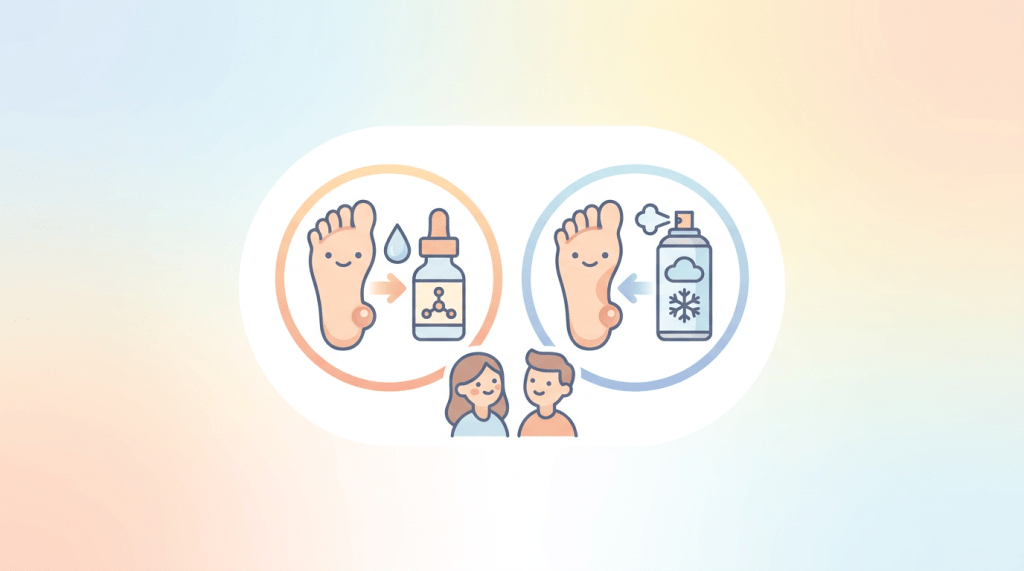
When it comes to tackling stubborn plantar warts, two of the most popular and accessible over-the-counter methods are salicylic acid and freezing (cryotherapy). Choosing between salicylic acid vs freezing for plantar warts depends largely on your wart’s size and location, your pain tolerance, and how quickly you desire results. Generally, salicylic acid offers a gentler, more gradual approach suitable for smaller warts and sensitive skin, while freezing provides a quicker, more aggressive option often preferred for tougher or larger warts.
What is Salicylic Acid Treatment?
Salicylic acid is a keratolytic agent, meaning it works by softening and dissolving the protein (keratin) that makes up the wart and the thick layer of skin surrounding it. This active ingredient helps to gradually peel away the infected skin layers, encouraging the body’s immune system to recognize and eliminate the virus causing the wart. It’s commonly found in various over-the-counter preparations, including liquid solutions, gels, and adhesive patches, often in concentrations ranging from 17% to 40%. The treatment typically involves daily application after filing down the wart with an emery board or pumice stone, requiring consistent effort over several weeks or even months to achieve complete resolution.
What is Freezing (Cryotherapy) for Warts?
Freezing, or cryotherapy, for plantar warts involves applying extreme cold to the wart tissue, usually with liquid nitrogen in a clinical setting or a dimethyl ether and propane blend in at-home kits. The intense cold rapidly freezes the water inside the wart cells, forming ice crystals that rupture the cell walls and destroy the tissue. This process leads to the formation of a blister underneath the treated wart, which eventually dries up, lifts, and falls off, taking the wart with it. Freezing treatments are often quicker than salicylic acid, with results sometimes seen after just a few applications, but they can be more uncomfortable during and immediately after the procedure.
Shop Jaws Podiatry on Amazon
Podiatrist-formulated foot-care products for fungus, calluses, and cracked heels.
Visit the Jaws Podiatry Store →As an Amazon Associate we earn from qualifying purchases.
Head-to-Head Comparison
| Feature | Salicylic Acid Treatment | Freezing (Cryotherapy) |
|---|---|---|
| Cost | Generally low-cost; over-the-counter products are affordable and widely available. | Over-the-counter kits are moderately priced. Professional treatments by a podiatrist are significantly more expensive per session. |
| Effectiveness | Highly effective for many warts, especially smaller ones. Requires consistent, long-term application (weeks to months). Success rates can be 70-80% with diligent use. | Often effective, especially for more stubborn or larger warts. Can be quicker, with results in weeks, but may require multiple sessions. Professional cryotherapy is generally more potent than OTC kits. |
| Ease of Use | Very easy for home use. Simple daily application of liquid, gel, or patch. Can be messy if not applied carefully. | OTC kits require careful application to avoid damaging healthy skin. Professional treatment is performed by a healthcare provider. Learning curve for precise application with home kits. |
| Who it’s Best For | Individuals with mild to moderate plantar warts, those preferring a gradual and less painful approach, people with sensitive skin (with caution), and children (lower concentrations). Suitable for those committed to daily treatment. | Individuals with stubborn, larger, or painful plantar warts, those seeking faster results, and those who can tolerate some discomfort. Professional treatment is ideal for resistant warts or those that have spread. |
| Downsides | Slow results, requires daily commitment, can cause irritation, redness, or peeling of surrounding healthy skin if not applied precisely. Not always effective for very deep or extensive warts. | Can be painful during and after application (stinging, burning, blistering). Risk of scarring, skin discoloration (hypopigmentation), or nerve damage if not applied correctly, especially with OTC kits. Blisters can be uncomfortable. |
When to Choose Salicylic Acid for Plantar Warts
You should consider salicylic acid treatment if you have smaller, less painful plantar warts and are prepared for a consistent, long-term approach. It’s often the first line of defense due to its accessibility, affordability, and relatively gentle nature. Salicylic acid is particularly suitable for:
- First-time wart sufferers: If you’re new to dealing with plantar warts, salicylic acid offers a low-risk starting point.
- Children: Lower concentrations of salicylic acid are generally safer and less intimidating for children, though always consult a pediatrician or podiatrist for proper guidance.
- Individuals with sensitive skin: While it can cause irritation, salicylic acid is typically less aggressive than freezing, allowing for closer monitoring of skin reaction.
- Those preferring a gradual approach: If you’re patient and diligent with daily application, salicylic acid can effectively resolve warts without the acute pain associated with freezing.
- DIY enthusiasts: With clear instructions, salicylic acid products are straightforward to use at home.
To maximize effectiveness, it’s crucial to follow the product instructions diligently, which often includes soaking the foot, filing down the wart, and then applying the acid. Consistency is key. For an effective over-the-counter option, consider a high-quality salicylic acid wart remover check the current price on Amazon.
Safety Note: If you have diabetes, neuropathy, or poor circulation, it is crucial to consult a podiatrist before using salicylic acid or any other DIY foot care product. These conditions can impair healing and increase the risk of infection or other complications.
When to Choose Freezing (Cryotherapy) for Plantar Warts
Freezing is often chosen when a quicker, more aggressive treatment is desired, or when warts are more stubborn or larger. It’s an excellent option for those who have tried milder methods without success or who prefer fewer, more impactful treatment sessions. Freezing is often best for:
- Stubborn or persistent warts: If a wart has resisted salicylic acid or other gentle treatments, freezing may provide the necessary potency.
- Larger or deeper warts: While challenging for OTC kits, professional cryotherapy can penetrate deeper to target larger wart roots.
- Individuals seeking faster results: While not instant, freezing can often show results in fewer applications compared to the daily regimen of salicylic acid.
- Those with a higher pain tolerance: The acute pain and blistering associated with freezing may be tolerable for some in exchange for quicker resolution.
- When professional intervention is sought: Podiatrists use liquid nitrogen, which is significantly colder and more effective than over-the-counter freezing kits, for more resistant cases.
When using an at-home freezing kit, precision is vital to avoid damaging surrounding healthy skin. Always read and follow the instructions carefully. For a convenient at-home solution, you might consider an over-the-counter wart freezing kit check the current price on Amazon.
Safety Note: As with salicylic acid, individuals with diabetes, neuropathy, or poor circulation should always consult a podiatrist before attempting at-home freezing treatments for plantar warts. The risk of tissue damage and impaired healing is significantly higher for these individuals.
Key Takeaways
- The choice between salicylic acid and freezing for plantar warts depends on wart size, desired speed of results, and pain tolerance.
- Salicylic acid is a gradual, gentler, and more affordable option, best for smaller warts and those committed to daily treatment over weeks to months.
- Freezing provides a quicker, more aggressive approach suitable for stubborn or larger warts, though it can involve more acute discomfort and potential for blistering.
- Over-the-counter options exist for both treatments, but professional cryotherapy by a podiatrist is more potent and precise than at-home freezing kits.
- Always consult a podiatrist before attempting any DIY wart treatment if you have underlying health conditions like diabetes, neuropathy, or poor circulation.
Related Guides
Related Guides
Frequently Asked Questions
How long do plantar wart treatments take to work?
The duration of treatment varies significantly between salicylic acid and freezing, and also depends on the individual wart. Salicylic acid treatments typically require consistent daily application for several weeks to several months, with some warts taking up to three months or more to fully resolve. Freezing treatments, especially professional cryotherapy, can show results more quickly, often within a few sessions spaced a week or two apart. However, even with freezing, multiple treatments are usually necessary, and complete resolution can still take several weeks. Patience and persistence are key for both methods.
Is one method more painful than the other?
Generally, freezing (cryotherapy) causes more acute pain during and immediately after the treatment. You might experience a stinging, burning, or throbbing sensation as the wart freezes, followed by discomfort and blistering in the days following. Salicylic acid, while generally less painful, can cause mild irritation, redness, or a slight burning sensation if it comes into contact with healthy skin, or if the skin becomes overly sensitive from repeated applications. Most people find the discomfort from salicylic acid to be much more manageable than that from freezing.
Can I combine salicylic acid and freezing treatments?
While it might seem logical to combine treatments for faster results, it’s generally not recommended to combine over-the-counter salicylic acid and freezing methods simultaneously without professional guidance. Doing so can significantly increase the risk of skin irritation, burns, blistering, and potential scarring, as both treatments are designed to destroy skin tissue. If you’re not seeing results with one method, it’s best to consult a podiatrist or healthcare professional who can advise on the most appropriate next steps, which might include professional-grade combined therapies under their supervision.
When should I see a podiatrist for plantar warts?
You should consider seeing a podiatrist for plantar warts if:
- The wart is painful, bleeding, or changing in appearance.
- You have attempted over-the-counter treatments for several weeks without success.
- The wart is large, deep, or has spread to other areas of your foot.
- You have multiple warts or a mosaic wart (a cluster of warts).
- You have underlying health conditions such as diabetes, neuropathy, poor circulation, or a compromised immune system, as DIY treatments can pose significant risks.
- You are unsure about the diagnosis and want to confirm it’s a wart and not another skin condition.
A podiatrist can offer stronger professional treatments, including higher-concentration acids, more potent cryotherapy with liquid nitrogen, laser therapy, or surgical removal, and ensure the safest and most effective approach for your specific situation.
Are there other treatment options besides salicylic acid and freezing?
Yes, several other treatment options are available for plantar warts, especially if salicylic acid and freezing prove ineffective. These include:
- Duct Tape Occlusion: While its effectiveness is debated, some people find success by covering the wart with duct tape for several days, then soaking and filing.
- Cantharidin: A blistering agent applied by a podiatrist, which causes a blister to form under the wart, lifting it off the skin.
- Laser Treatment: Pulsed-dye laser therapy can burn and seal off the tiny blood vessels that supply the wart, causing it to die.
- Immunotherapy: Medications or injections that stimulate the body’s immune system to fight the wart virus.
- Minor Surgery: In some resistant cases, a podiatrist may surgically remove the wart, though this is typically a last resort due to potential scarring and recurrence.
A podiatrist can help determine the best course of action based on the wart’s characteristics and your overall health.


Leave a Reply