Shop Jaws Podiatry on Amazon
Podiatrist-formulated foot-care products for fungus, calluses, and cracked heels.
Visit the Jaws Podiatry Store →As an Amazon Associate we earn from qualifying purchases.
When it comes to managing flat feet, the choice between arch support and cushioned insoles can feel overwhelming. For most individuals experiencing pain or seeking to improve foot biomechanics, arch support insoles are generally superior, as they provide the structural alignment needed to alleviate symptoms. Cushioned insoles, while offering comfort and impact absorption, primarily address general foot fatigue and may not provide the necessary support to correct the underlying issues associated with fallen arches.
What are Arch Support Insoles?
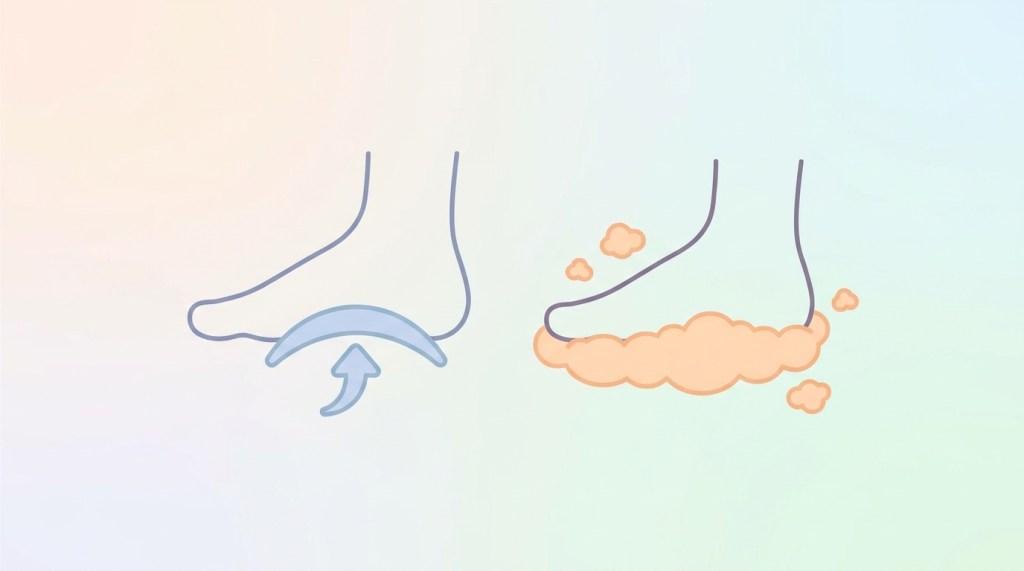
Arch support insoles, also known as orthotic insoles or orthotics, are specifically designed to provide structural support to the medial longitudinal arch of the foot. Their primary function is to help redistribute pressure across the foot, correct overpronation (the excessive inward rolling of the foot), and stabilize the foot and ankle during movement. By doing so, they aim to improve overall foot function and reduce strain on various ligaments, tendons, and joints, not just in the foot but potentially up the kinetic chain to the ankles, knees, and hips.
These insoles come in various degrees of rigidity, from soft, flexible options to semi-rigid and rigid designs. The material typically includes EVA foam, plastic, or carbon fiber, shaped to conform to the arch and provide a supportive lift. For individuals with flat feet, who often experience a collapsed or very low arch, arch support insoles work to gently lift and support the arch, preventing it from flattening excessively during weight-bearing activities. This can significantly reduce pain associated with conditions like plantar fasciitis, posterior tibial tendon dysfunction (PTTD), and general foot fatigue caused by poor alignment.
What are Cushioned Insoles?
Cushioned insoles, in contrast to arch support insoles, are primarily designed for shock absorption and general comfort. They are typically made from soft, pliable materials such as gel, memory foam, or soft EVA foam, often without significant contouring or structural support for the arch. Their main purpose is to provide a softer landing for your feet, absorbing impact from walking, running, or standing on hard surfaces.
These insoles aim to reduce general foot fatigue and provide a plush feel underfoot, making shoes feel more comfortable. They can be beneficial for individuals who spend long hours on their feet, those seeking to reduce the impact on their joints, or simply wanting to enhance the comfort of their footwear. However, because they lack significant arch contouring, cushioned insoles do not effectively address biomechanical issues like overpronation or fallen arches. While they may offer temporary pain relief by reducing pressure points, they do not provide the corrective support that many individuals with flat feet require to manage their condition long-term.
Shop Jaws Podiatry on Amazon
Podiatrist-formulated foot-care products for fungus, calluses, and cracked heels.
Visit the Jaws Podiatry Store →As an Amazon Associate we earn from qualifying purchases.
Head-to-Head Comparison
| Feature | Arch Support Insoles | Cushioned Insoles |
|---|---|---|
| Primary Purpose | Structural support, biomechanical correction, pressure redistribution, pain relief from alignment issues. | Shock absorption, general comfort, reduction of impact forces, mild foot fatigue relief. |
| Effectiveness for Flat Feet | Highly effective for addressing symptoms of flexible flat feet, correcting overpronation, and alleviating pain related to structural issues. Can improve walking and running mechanics. | Less effective for correcting flat foot-related biomechanical issues. May offer temporary comfort but does not provide the necessary structural support to mitigate overpronation or associated pain. |
| Cost | Generally moderately to significantly more expensive than basic cushioned insoles, especially for custom or semi-custom options. Over-the-counter options vary widely. | Typically more affordable, ranging from inexpensive to mid-range depending on materials and brand. |
| Comfort & Ease of Use | May require a break-in period as feet adjust to new alignment. Can feel firm or rigid initially. Easy to place in most shoes, though bulkier options may require removing existing insoles. | Generally comfortable immediately, offering a soft, plush feel. Easy to place in most shoes and often thinner than arch support options. |
| Who It’s Best For | Individuals with painful flexible flat feet, overpronation, plantar fasciitis, shin splints, bunions, heel pain, or general foot/ankle/knee pain linked to fallen arches. Athletes seeking biomechanical stability. | Individuals seeking general foot comfort, shock absorption for standing or walking long periods, mild foot fatigue relief, or those with rigid flat feet who cannot tolerate significant arch support. |
| Potential Downsides | Can be uncomfortable during the break-in period. May not fit well in all types of footwear (e.g., dress shoes). More expensive. Can be too rigid for individuals with rigid flat feet or certain foot deformities. | Does not address structural foot issues. Offers limited long-term pain relief for conditions caused by flat feet. May wear out faster due to softer materials. |
When to Choose Arch Support Insoles
Choosing arch support insoles is often the recommended path for individuals with flat feet who are experiencing pain or discomfort directly related to their foot structure. If you notice your arches collapsing excessively when you stand or walk, or if you suffer from conditions commonly associated with overpronation, these insoles can provide significant relief and improved function.
You should consider arch support insoles if you experience:
- Plantar Fasciitis: Pain in the heel and arch, especially with the first steps in the morning. Arch support can reduce strain on the plantar fascia.
- Overpronation: Your foot rolls inward excessively, leading to potential issues in your ankles, knees, or even hips.
- Posterior Tibial Tendon Dysfunction (PTTD): A condition where the tendon supporting the arch becomes inflamed or torn, leading to a progressive flattening of the arch.
- Metatarsalgia or Forefoot Pain: Improved arch support can help redistribute pressure away from the ball of the foot.
- Shin Splints: Pain along the shin bone, often exacerbated by overpronation during activities.
- General Foot, Ankle, or Knee Pain: If your pain improves with supportive footwear, it’s a strong indicator that arch support may help.
- Athletic Activities: Runners and athletes with flat feet often benefit from arch support to maintain proper alignment and reduce injury risk during high-impact activities.
When selecting arch support insoles, look for options that offer a firm yet comfortable arch contour. It’s often beneficial to start with a semi-rigid support and adjust as your feet adapt. A good quality over-the-counter option can often make a significant difference. Consider a highly-rated arch support insole designed for flat feet to help realign your foot and alleviate pain.
When to Choose Cushioned Insoles
While less effective for addressing the structural issues of flat feet, cushioned insoles still have a valuable role for certain individuals and situations. They excel at providing immediate comfort and reducing the impact on your joints, making them a suitable choice when specific biomechanical correction isn’t the primary goal.
You should consider cushioned insoles if you:
- Seek General Comfort: If your main goal is simply to make your shoes feel softer and more comfortable, especially in footwear that lacks adequate padding.
- Stand for Long Periods: Professions that require prolonged standing can lead to general foot fatigue. Cushioned insoles can help absorb ground reaction forces and reduce discomfort.
- Have Rigid Flat Feet: Some individuals have “rigid flat feet” where the arch does not reappear even when non-weight-bearing. For these individuals, forcing an arch with rigid support can be painful. Cushioned insoles may offer more comfort without creating new pressure points.
- Need Impact Absorption: If you engage in activities that involve repetitive impact but do not have significant overpronation issues, such as walking for exercise on hard surfaces.
- Are Layering: Sometimes, a thin cushioned insole can be placed on top of an existing, firmer orthotic for added comfort, without compromising the underlying support.
- Experience Mild Foot Fatigue: For mild, non-specific foot soreness that isn’t tied to a specific biomechanical problem.
Cushioned insoles are an excellent choice for enhancing the comfort of everyday shoes or providing extra padding for work boots. They can reduce the stress on your joints and muscles from daily wear and tear. Explore a comfortable pair of cushioned insoles for immediate relief and enhanced shoe comfort.
Key Takeaways
- For most individuals with flat feet experiencing pain or biomechanical issues, arch support insoles are the superior choice due to their ability to provide structural support and correct overpronation.
- Cushioned insoles primarily offer shock absorption and general comfort, but do not address the underlying structural causes of flat foot pain.
- Arch support insoles may require a break-in period, while cushioned insoles typically offer immediate softness.
- The effectiveness of insoles for flat feet largely depends on the type of flat foot (flexible vs. rigid) and the specific symptoms experienced.
- Always consider your specific symptoms, activity level, and foot type when choosing between arch support and cushioned insoles.
Related Guides
Related Guides
Frequently Asked Questions
Can I use both arch support and cushioned insoles together?
While it’s possible, it’s generally not recommended to layer a full arch support insole with another full cushioned insole, as it can make your shoes too tight and alter the intended support. However, some arch support insoles come with integrated cushioning, or you might place a very thin, soft top layer over a firm orthotic if extra padding is needed without compromising the arch support. Consult with a podiatrist for personalized advice.
How do I know if I have flat feet?
A common at-home test is the “wet test.” Wet your feet and stand on a piece of paper or cardboard. If you see a full impression of your foot, with little to no inward curve where the arch should be, you likely have flat feet. More definitively, observe your feet when standing; if your arches collapse significantly or your ankles roll inward (overpronation), you may have flat feet. For a professional diagnosis and understanding of your specific foot mechanics, a podiatrist visit is recommended.
Will arch support insoles cure my flat feet?
Arch support insoles do not “cure” flat feet, especially if it’s a structural condition. Instead, they manage the symptoms, improve foot function, and help prevent the progression of related problems. By providing proper alignment and support, they can significantly reduce pain, improve stability, and enhance comfort during daily activities and exercise. Consistent use is key to sustained benefits.
How long do insoles last, and when should I replace them?
The lifespan of insoles varies greatly depending on the material, frequency of use, and your activity level. Cushioned insoles, made from softer foams and gels, tend to wear out faster, typically lasting 3-6 months. Arch support insoles, especially those made from more rigid materials like EVA foam or plastic, can last 6-12 months or even longer. You should replace insoles when you notice a decrease in support, comfort, or if the material starts to compress, crack, or lose its shape. If your foot pain returns, it’s often a sign that your insoles need replacing.
Should I consult a podiatrist before buying insoles for flat feet?
While many over-the-counter insoles are available, consulting a podiatrist is highly recommended, especially if you experience persistent pain, have a severe case of flat feet, or have underlying health conditions. A podiatrist can accurately diagnose the cause of your flat feet, assess your specific biomechanics, and recommend the most appropriate type of insole, whether over-the-counter or custom orthotics. This is particularly crucial for individuals with underlying health conditions such as diabetes, neuropathy, or poor circulation, who should always consult a podiatrist before introducing new foot care products or tools to prevent complications.


Leave a Reply