Shop Jaws Podiatry on Amazon
Podiatrist-formulated foot-care products for fungus, calluses, and cracked heels.
Visit the Jaws Podiatry Store →As an Amazon Associate we earn from qualifying purchases.
Finding the best toenail clippers for thick nails requires tools that are not only sharp and durable but also designed for precision and comfortable handling. The ideal clippers feature strong, surgical-grade stainless steel blades, a wide jaw opening, and an ergonomic grip to provide the leverage needed for a clean, safe cut without straining your hands or damaging the nail.
What to Look For in Clippers for Thick Nails
When dealing with thick or hard toenails, standard clippers often fall short, leading to frustration, incomplete cuts, or even injury. Here’s what you should prioritize when selecting your next pair:
- Blade Material and Sharpness: Look for high-quality, surgical-grade stainless steel. This material ensures the blades stay sharp longer, resist rust, and can be easily sterilized. Sharp blades are crucial for a clean cut, preventing jagged edges or nail splitting.
- Jaw Opening: Thick nails require a wider jaw opening than typical clippers offer. Ensure the clippers can comfortably accommodate the thickness of your nail without forcing.
- Blade Design:
- Straight Blades: Podiatrists generally recommend straight blades for toenails to prevent ingrown nails. They encourage a straight-across cut.
- Slightly Curved Blades: Some heavy-duty clippers have a slight curve, which can be effective, but extreme curves should be avoided for toenails.
- Pointed Tips: Nippers often feature pointed tips, which are excellent for reaching into tight spots or dealing with ingrown nails, but require careful handling.
- Ergonomic Handle and Grip: A comfortable, non-slip handle is essential, especially when applying pressure to thick nails. Look for textured grips, longer handles, or designs that fit well in your hand to provide better leverage and control.
- Spring Mechanism: A double-spring or single-spring mechanism provides smooth action and helps the blades open wide after each cut, reducing hand fatigue.
- Durability: Investing in a well-constructed tool means it will withstand repeated use on tough nails without bending, breaking, or dulling quickly.
- Safety Features: Some clippers come with protective caps or locking mechanisms for safe storage. While not strictly necessary, they can add to the longevity and safety of the tool.
Top Picks for Thick Toenails
Navigating the options for the best toenail clippers for thick nails can be daunting. We’ve broken down the top types of clippers that excel in handling even the toughest toenails.
1. Heavy-Duty Lever-Type Clippers (Standard Design, Enhanced Strength)
These are essentially an upgraded version of your traditional nail clippers, built with stronger materials and a wider jaw. They are a great starting point for many people experiencing moderately thick toenails.
- Best For: General use on moderately thick or hard toenails; individuals transitioning from standard clippers; those who prefer a familiar design.
- Key Features: Typically made from robust stainless steel, often with a larger, more comfortable lever arm for increased leverage. They have a wider jaw opening than standard clippers but maintain a compact form factor.
- Pros:
- Familiar and intuitive to use for most people.
- More compact and portable than some other heavy-duty options.
- Provides a good balance of power and control for many users.
- Generally more affordable than podiatrist-style nippers.
- Cons:
- May still struggle with extremely thick or fungal nails.
- Can be difficult for those with significant hand strength issues or arthritis.
- Less precise for intricate work like ingrown nails compared to nippers.
For a reliable and sturdy option that feels familiar yet delivers extra power, consider a heavy-duty lever-type clipper available on Amazon.
2. Podiatrist-Style Nippers (Professional Grade)
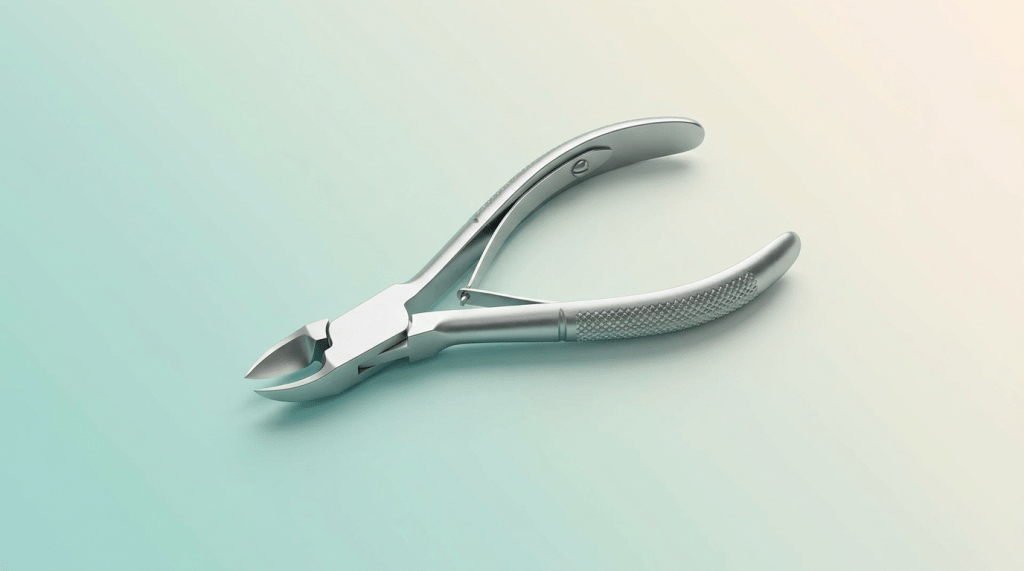
Often recommended by foot care professionals, these nippers resemble pliers and offer superior leverage and precision. Their design allows for a clean, straight cut, which is crucial for preventing ingrown nails.
- Best For: Severely thick, hard, or fungal toenails; ingrown toenails; individuals needing maximum leverage and precision; those with dexterity challenges that benefit from the plier-like grip.
- Key Features: Long, strong handles with a spring mechanism for smooth operation. Blades are typically straight or slightly curved, often with pointed tips for accuracy. Made from high-grade surgical stainless steel.
- Pros:
- Exceptional cutting power for even the toughest nails.
- Precision tips allow for detailed work, including around ingrown nails.
- Ergonomic design reduces hand strain due to increased leverage.
- Durable and long-lasting when properly cared for.
- Cons:
- Can be intimidating for first-time users due to their size and sharp tips.
- Require careful handling to avoid injury, especially with pointed tips.
- Generally more expensive than standard clippers.
For professional-grade performance and precision, a high-quality podiatrist-style nipper is an excellent choice found on Amazon. If early signs of nail fungus are contributing to nail thickening, consider a targeted treatment like Jaws Podiatry’s undecylenic-acid + tea-tree-oil nail enhancer available from Jaws Podiatry, which can complement proper nail trimming by addressing the underlying issue.
3. Wide-Jaw Opening Clippers (For Extra Thick & Wide Nails)
These specialized clippers are designed to accommodate nails that are not only thick but also unusually wide, where standard heavy-duty clippers might still struggle to get a full grip.
- Best For: Extremely thick or wide nails; nails affected by conditions like onychomycosis (fungal nails) or trauma that causes significant thickening and width.
- Key Features: The defining characteristic is an extra-wide jaw opening, often significantly larger than standard or even heavy-duty clippers. They typically feature robust construction and sharp blades.
- Pros:
- Can tackle nails that are too thick or wide for other clippers.
- Reduces the need for multiple small cuts, leading to a cleaner finish.
- Often built with strong, durable materials for longevity.
- Cons:
- Can be bulky to store or travel with.
- May be overkill for those with only moderately thick nails.
- Requires careful alignment due to the large cutting surface.
If you have exceptionally thick and wide toenails, a wide-jaw opening clipper provides the necessary capacity on Amazon.
4. Long-Handle or Extended-Reach Clippers (For Mobility Challenges)
For individuals with limited flexibility, back pain, or difficulty reaching their feet, long-handle clippers offer a practical solution, allowing for comfortable trimming without excessive bending.
- Best For: Elderly individuals; those with back pain, hip issues, or limited mobility; anyone who struggles to reach their feet comfortably.
- Key Features: An extended handle that can range from a few inches to over a foot, often with a comfortable grip. The clipper head itself is usually a heavy-duty design capable of cutting thick nails. Some models may have an angled head for better visibility.
- Pros:
- Significantly improves reach and reduces physical strain during nail care.
- Promotes independence in personal grooming for those with mobility issues.
- Often designed with ergonomic grips for comfortable handling.
- Cons:
- Can be harder to control precision due to the longer lever arm.
- May feel less direct than holding clippers closer to the nail.
- Bulkier to store compared to compact clippers.
For individuals needing assistance with reach, a long-handle clipper can make all the difference available on Amazon.
5. Electric Nail Grinders/Files (Gentle & Controlled)
While not clippers in the traditional sense, electric grinders offer a gentle and controlled method for thinning and shaping thick nails, especially for those who fear sharp blades or have extremely brittle nails.
- Best For: Very sensitive nails; individuals prone to ingrown nails; those with diabetes or neuropathy (with extreme caution and podiatrist consultation); people who prefer a gradual approach to nail reduction.
- Key Features: Utilizes a rotating abrasive head (often diamond-coated or carborundum) to file down nail thickness. Speed settings are common, and some include integrated lights for better visibility.
- Pros:
- Eliminates the risk of accidental cuts from sharp blades.
- Allows for precise control over nail length and thickness.
- Smooths nail edges, preventing snags.
- Can be less intimidating for nervous users.
- Cons:
- Takes longer to thin and shorten very thick nails compared to clipping.
- Can generate heat if held in one spot for too long, requiring breaks.
- Requires batteries or charging.
- Some models can be noisy.
For a gentler, file-based approach to managing thick nails, an electric nail grinder can be found on Amazon.
Shop Jaws Podiatry on Amazon
Podiatrist-formulated foot-care products for fungus, calluses, and cracked heels.
Visit the Jaws Podiatry Store →As an Amazon Associate we earn from qualifying purchases.
Comparison Table: Best Toenail Clippers for Thick Nails
| Best For | Key Feature | Watch-Out |
|---|---|---|
| Moderately Thick Nails, General Use | Enhanced strength, wider jaw in familiar design | May struggle with extreme thickness; less precise for ingrowns. |
| Severely Thick, Fungal, Ingrown Nails | Professional-grade leverage, precision tips, spring mechanism | Can be intimidating; requires careful handling to avoid injury. |
| Extremely Thick & Wide Nails | Extra-wide jaw opening for maximum capacity | Bulky; may be overkill for average thick nails. |
| Limited Mobility, Difficulty Reaching Feet | Extended handle for easier reach and reduced bending | Reduced precision compared to direct handling. |
| Sensitive Nails, Fear of Blades, Gradual Thinning | Rotating abrasive head for filing, no sharp blades | Slower process; can generate heat; requires power source. |
How to Use & Care Tips for Thick Toenails
Proper technique and care are just as important as having the right tools. Follow these steps for safe and effective nail trimming:
- Soak Your Feet: Always begin by soaking your feet in warm water for 10-15 minutes. This softens the nails, making them easier to cut and reducing the risk of cracking or splitting.
- Clean Your Tools: Before and after each use, clean your clippers or nippers with rubbing alcohol to sterilize them. This prevents the spread of bacteria or fungus.
- Cut Straight Across: For toenails, always cut straight across. Avoid rounding the corners, as this can lead to painful ingrown toenails. Make small cuts, moving across the nail.
- Don’t Cut Too Short: Leave a small amount of white nail visible at the tip. Cutting too close to the quick can cause pain, bleeding, and increase the risk of infection.
- File Edges: After clipping, use a nail file to gently smooth any sharp edges or corners. This helps prevent snagging and further reduces the risk of ingrown nails.
- Moisturize: Apply a moisturizing cream to your feet and nails after trimming to keep them hydrated and healthy.
- Replace When Dull: Even the best clippers will eventually dull. Dull blades can tear or crush the nail rather than cut it cleanly. Replace your clippers when they no longer cut efficiently.
- Store Properly: Keep your clippers clean and dry, ideally with a protective cap, to maintain their sharpness and prevent rust.
- Consult a Podiatrist for Concerns: If you have very thick, discolored, or painful toenails, or if you have diabetes, neuropathy, or poor circulation, it is crucial to consult a podiatrist before attempting to trim them yourself. DIY foot care with sharp tools can lead to serious complications for these individuals. A podiatrist can safely trim your nails and provide advice on ongoing care.
Key Takeaways
- Choosing the right clippers with strong, sharp blades and an ergonomic design is essential for safely managing thick toenails.
- Podiatrist-style nippers offer superior leverage and precision for very thick or ingrown nails, while heavy-duty lever-type clippers are great for general robust use.
- Always soften nails by soaking before trimming and cut straight across to prevent ingrown toenails.
- Maintain hygiene by cleaning tools before and after use to prevent infections.
- Individuals with diabetes, neuropathy, or poor circulation should always consult a podiatrist for professional nail care to avoid complications.
Related Guides
Related Guides
Frequently Asked Questions
What causes toenails to become thick?
Several factors can contribute to toenail thickening, medically known as onychauxis or onychogryphosis. Common causes include:
- Aging: As we age, nail growth slows, and the nail plate can thicken and become harder.
- Fungal Infections (Onychomycosis): This is a very common cause, leading to discoloration, brittleness, and significant thickening of the nail.
- Trauma: Repeated micro-trauma from ill-fitting shoes or a single severe injury can damage the nail matrix, causing the nail to grow back thicker.
- Psoriasis: This skin condition can affect nails, causing pitting, discoloration, and thickening.
- Poor Circulation: Conditions like peripheral artery disease can impair nutrient delivery to the nails, affecting their health and thickness.
- Other Medical Conditions: Certain systemic diseases can also manifest as nail changes.
Can I use regular nail clippers for thick toenails?
While you can attempt to use regular nail clippers, it’s generally not recommended for truly thick toenails. Regular clippers are often not sharp enough, lack the necessary jaw opening, and don’t provide sufficient leverage. Using them on thick nails can lead to:
- Incomplete cuts, leaving jagged edges.
- Nail splitting or cracking
 HealthyStridesHQ
Leave a comment